Discover One of Jaipur’s Most Beautiful Hidden Architectural Wonders
Hidden among the historic lanes of Amer, just a short walk from the magnificent Amer Fort, lies one of Jaipur’s most fascinating yet often overlooked heritage sites—Panna Meena Ka Kund. While thousands of travellers visit Amer every day, many unknowingly miss this remarkable stepwell that has silently witnessed centuries of Rajasthan’s history.
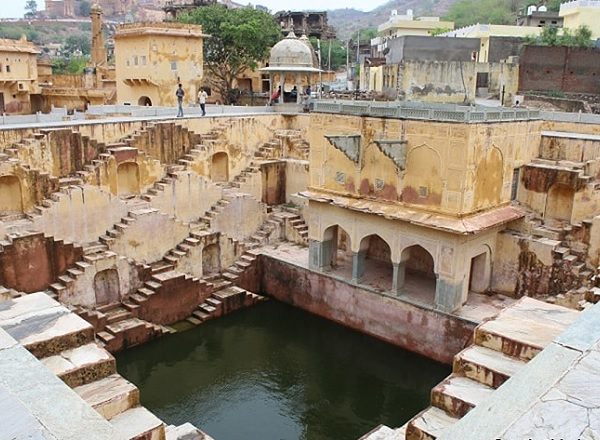
The moment you arrive, the monument immediately captures your attention. Hundreds of perfectly aligned stone steps descend toward the water, creating a breathtaking geometric pattern that looks almost impossible to believe.
Every angle reveals a new perspective, making it one of the most photogenic places in Jaipur. However, Panna Meena Ka Kund is much more than a beautiful photography location.
It is a masterpiece of ancient engineering, a symbol of sustainable water conservation, and a reminder of how intelligently people in Rajasthan adapted to life in a dry climate long before modern technology existed.
At JaipurByGirish.com, we believe every historic monument has a story worth discovering. Our goal is to help travellers explore Jaipur beyond the famous landmarks through detailed, reliable, and easy-to-understand travel guides.
In this complete guide, you’ll learn everything you need to know before visiting Panna Meena Ka Kund, from its fascinating history and architecture to practical travel tips that will help you make the most of your visit.
Quick Answer
Panna Meena Ka Kund is a historic stepwell located in Amer, Jaipur, Rajasthan. It is famous for its symmetrical staircase design, Rajput architecture, and traditional rainwater harvesting system. Entry is free, and the best time to visit is from October to March. Most visitors spend around 30 to 45 minutes exploring the monument and taking photographs.
Quick Information
Details | Information
————————————————————————————————————————
Attraction Panna Meena Ka Kund
Location Amer, Jaipur, Rajasthan
Monument Type Historic Stepwell
Built During Around the 16th Century
Architecture Style Rajput Architecture
Entry Fee Free
Timings 9:00 AM – 5:00 PM
Photography Allowed
Best Time to Visit October to March
Time Required 30–45 Minutes
Suitable For Families, Couples, Solo Travellers, History Lovers & Photographers
Why You Can Trust This Guide
Travel information should be accurate, practical, and easy to understand. This guide has been prepared by JaipurByGirish.com using historical references, publicly available visitor information, and local travel knowledge. Rather than offering only basic facts, we focus on answering the questions real travellers ask before planning a visit.
Our aim is simple—to help you explore Jaipur with confidence while discovering the stories behind its remarkable heritage.
What Is Panna Meena Ka Kund?
Panna Meena Ka Kund is one of Jaipur’s oldest surviving stepwells and an outstanding example of traditional Indian water architecture. Located in the historic town of Amer, the monument was built to collect and store rainwater, ensuring a reliable water supply throughout the year.
For centuries, it served as a lifeline for local communities. Families came here every day to collect water, travellers rested in its cool surroundings, and neighbours gathered to socialise. Over time, the stepwell became more than just a source of water—it became an important part of community life.
Today, although it no longer serves its original purpose, Panna Meena Ka Kund continues to attract visitors from around the world who admire its historical significance and remarkable architectural design.
History of Panna Meena Ka Kund
The history of Panna Meena Ka Kund dates back to the 16th century, during a time when Rajasthan faced long summers and limited rainfall. Water was one of the most valuable resources, and communities depended on intelligent storage systems to survive throughout the year. Stepwells like Panna Meena Ka Kund were built as practical solutions to this challenge, allowing rainwater to be collected and stored for everyday use.
Although the exact year of construction remains uncertain, historians believe the stepwell was built during the rule of the Kachwaha Rajputs, who were known for promoting impressive architecture and efficient water management systems. Their engineering skills can still be seen in many historic structures across Jaipur and Amer.
The name Panna Meena Ka Kund is believed to be connected with Panna Meena, a respected local figure or community leader. While historical records do not clearly explain the origin of the name, local traditions have preserved this story for generations. Like many heritage monuments in Rajasthan, the legends surrounding the stepwell add a unique charm to its historical importance.
During its active years, the kund was much more than a water reservoir. It served as the centre of daily life for nearby residents. Women gathered here to collect water, children played on the wide stone steps, and travellers rested in the cool surroundings before continuing their journeys. Community gatherings and social interactions often took place around the stepwell, making it an important part of everyday life in Amer.
Today, Panna Meena Ka Kund stands as a reminder of Rajasthan’s remarkable past. It reflects how ancient communities combined engineering, architecture, and environmental awareness to solve practical problems while creating structures that remain beautiful even after centuries.
The Remarkable Architecture of Panna Meena Ka Kund
One of the first things visitors notice about Panna Meena Ka Kund is its extraordinary symmetry. Unlike ordinary wells, this stepwell was designed with hundreds of precisely arranged stone steps that descend toward the water from multiple directions. Every staircase follows a carefully planned pattern, creating a striking geometric design that continues to amaze visitors today.
The monument is built primarily from local sandstone, a material that has survived centuries of changing weather while retaining much of its original appearance. The warm golden colour of the stone blends beautifully with the surrounding landscape, especially during sunrise and sunset.
What makes the architecture even more impressive is the level of precision achieved without modern construction technology. Ancient craftsmen relied on mathematical calculations, practical experience, and remarkable skill to create a perfectly balanced structure. Even today, architects and engineers admire the monument for its intelligent design and flawless proportions.
The staircases were not created only for visual appeal. Their arrangement allowed people to reach the water regardless of its level. As the water level changed throughout the year, visitors could simply use different sections of the staircase to access it safely.
This combination of beauty and functionality is one of the reasons why Panna Meena Ka Kund is considered an outstanding example of traditional Indian architecture.
A Masterpiece of Ancient Water Engineering
Long before modern water conservation techniques became popular, Rajasthan had already developed highly effective systems for storing rainwater. Panna Meena Ka Kund is one of the finest examples of this ancient knowledge.
The stepwell was carefully designed to collect rainwater during the monsoon season and preserve it for use during the dry months. Its deep structure helped reduce water evaporation, while the surrounding stone walls naturally kept the lower levels cooler than the outside temperature.
This clever design ensured that local residents had access to water even during periods of low rainfall. Instead of relying entirely on rivers or seasonal ponds, communities could depend on the stored water throughout the year.
Today, experts often describe traditional stepwells as early examples of sustainable architecture. They demonstrate how thoughtful design can work in harmony with nature rather than against it.
As concerns about water conservation continue to grow around the world, monuments like Panna Meena Ka Kund remind us that sustainable solutions have existed for centuries.
Cultural Importance
Panna Meena Ka Kund played an important role in the social and cultural life of Amer. While its primary purpose was to provide water, it also became a place where people met, shared stories, celebrated local traditions, and built community relationships.
In ancient Rajasthan, stepwells were often regarded as more than functional structures. They represented prosperity, cooperation, and respect for natural resources. Since water was considered precious, preserving and sharing it became an important community responsibility.
Women visited the kund every day to collect water while exchanging news and spending time together. Travellers found relief from the intense summer heat, and residents used the peaceful surroundings as a gathering place.
Although daily life has changed significantly over the centuries, the monument still reflects the cultural values of the people who built and used it. Every stone staircase carries the memory of generations who depended on this remarkable structure for survival.
Why Visit Panna Meena Ka Kund?
Many travellers focus only on Jaipur’s famous forts and palaces. While these attractions are certainly worth visiting, Panna Meena Ka Kund offers a completely different experience.
Here, you can admire ancient engineering instead of royal luxury. You can enjoy peaceful surroundings instead of crowded tourist areas. Most importantly, you can appreciate a monument that tells the story of everyday life rather than royal ceremonies.
Here are some reasons why this hidden gem deserves a place on your itinerary:
* One of Jaipur’s oldest surviving stepwells.
* Exceptional Rajput architecture.
* Beautiful symmetrical staircase design.
* Excellent photography opportunities.
* Free entry for all visitors.
* Peaceful atmosphere near Amer Fort.
* Rich historical and cultural significance.
* Ideal for architecture enthusiasts, photographers, students, and history lovers.
Unlike many modern tourist attractions, Panna Meena Ka Kund encourages visitors to slow down, observe, and appreciate the remarkable craftsmanship of the past.
Visitor Experience
A visit to Panna Meena Ka Kund feels different from exploring a busy fort or museum. As you walk through the historic streets of Amer, the monument suddenly appears, quietly tucked away from the main tourist route.
The first view is unforgettable. The perfectly aligned staircases create an optical illusion that almost seems impossible. Many visitors naturally stop for several moments just to admire the incredible symmetry before taking photographs.
Because the monument is relatively compact, there is no fixed route to follow. Instead, visitors can move around the viewing areas, observe the architecture from different angles, and spend time appreciating the peaceful atmosphere.
Early in the morning, the site feels especially calm. Birds can often be heard around the monument, while the soft sunlight highlights the geometric patterns of the stone steps. During these quieter hours, it becomes easy to imagine how this place once served as the heart of community life in Amer.
For many travellers, the experience is not about spending several hours at the monument. Instead, it is about discovering a hidden piece of Jaipur’s heritage that leaves a lasting impression despite its modest size.
Best Time to Visit Panna Meena Ka Kund
Although Panna Meena Ka Kund welcomes visitors throughout the year, choosing the right season can make your visit much more enjoyable. The weather in Jaipur changes significantly with each season, so planning your trip accordingly will help you explore the monument comfortably and capture better photographs.
Winter (October to March)
Winter is widely considered the best time to visit Panna Meena Ka Kund. During these months, Jaipur experiences pleasant weather, clear skies, and comfortable temperatures, making it ideal for sightseeing.
The cool climate allows visitors to spend more time admiring the architecture without feeling exhausted by the heat. In addition, the softer sunlight during winter creates excellent lighting for photography.
If you are planning a heritage tour of Amer, winter offers the most comfortable experience.
Why Visit in Winter?
* Pleasant weather
* Comfortable walking conditions
* Clear skies for photography
* Ideal for family trips
* Best overall visitor experience
Summer (April to June)
Summer in Jaipur can be extremely hot, with daytime temperatures often rising above 40°C (104°F).
Although Panna Meena Ka Kund remains open, visiting during the afternoon is not recommended because the stone surfaces become very warm and the sunlight can be harsh.
If you are visiting Jaipur during summer, try to arrive as early as possible in the morning.
Recommended Visiting Time: Before 9:00 AM
Monsoon (July to September)
The monsoon season brings a refreshing change to Jaipur. Occasional rainfall adds greenery to the surrounding landscape, and depending on the amount of rain, the stepwell may hold more water than usual.
Cloudy skies also create a unique atmosphere for photography.
However, visitors should walk carefully because some pathways may become slippery after rain.
Best Time of the Day
Even more important than the season is the time of day you choose to visit.
Early Morning
Early morning offers the best overall experience.
The monument is generally quieter; temperatures remain pleasant, and the natural light beautifully highlights the symmetry of the staircases.
This is also the perfect time for photographers who want clean compositions without large crowds.
Late Afternoon
Late afternoon is another excellent option.
As the sun begins to set, warm golden light falls across the sandstone walls and staircases, creating dramatic shadows and beautiful colour tones.
This time is especially popular among travel photographers.
Midday
While the monument remains accessible throughout the day, midday sunlight can be quite strong.
If possible, avoid visiting between 12:00 PM and 3:00 PM, particularly during the summer months.
Panna Meena Ka Kund Timings
Panna Meena Ka Kund is generally open every day of the week: 9:00 AM – 5:00 PM
Recommended Duration: 30 to 45 minutes
Since timings may occasionally change during special events or maintenance work, checking the latest local information before your visit is always a good idea.
Entry Fee
One of the best things about visiting Panna Meena Ka Kund is that there is no entry fee.
Visitors from India and abroad can explore this historic monument free of charge.
Visitor Type Entry Fee
———————————————————— | —————————————————–
Indian Visitors Free
Foreign Visitors Free
Children Free
Photography Free
Because entry is free, Panna Meena Ka Kund is an excellent destination for budget travellers exploring Jaipur.
How to Reach Panna Meena Ka Kund
Reaching Panna Meena Ka Kund is simple because it is located in the historic Amer area, which is well connected to the rest of Jaipur.
By Air
The nearest airport is Jaipur International Airport, located approximately 22 kilometres from the monument.
From the airport, visitors can hire a taxi or use app-based cab services. Depending on traffic, the journey usually takes 40 to 50 minutes.
By Train
The closest railway station is Jaipur Junction, around 13 kilometres away.
From the station, you can reach Amer by taxi, auto-rickshaw, or local bus.
Travel time is generally 30 to 40 minutes.
By Road
Amer has excellent road connectivity.
Visitors arriving by private vehicle or taxi can easily reach the monument through the Amer Road route.
Parking facilities are available near the Amer Fort area, followed by a short walk to the stepwell.
Photography Guide
Panna Meena Ka Kund has become one of Jaipur’s favourite destinations for photographers, travel bloggers, and architecture enthusiasts.
Its symmetrical design creates endless opportunities for creative photography.
Whether you use a smartphone or a professional camera, every angle reveals a different perspective.
The combination of sandstone architecture, geometric staircases, and natural light makes every photograph look unique.
However, good photography here is not only about equipment—it is about choosing the right time and respecting the heritage site.
Best Photography Spots
If you want memorable photographs, these viewpoints offer some of the best compositions.
The Main Viewing Platform
This is the most popular location because it captures the complete staircase pattern.
It is ideal for wide-angle photographs.
Corner Perspective
Standing near one of the upper corners creates a dramatic diagonal composition that highlights the monument’s symmetry.
Architectural Detail Shots
Instead of photographing the entire monument, focus on individual staircases, stone textures, and repeating patterns.
These close-up images beautifully showcase the craftsmanship of the monument.
Reflection Photography
If there is sufficient water inside the stepwell, try capturing reflections of the surrounding architecture.
These photographs often create stunning visual effects.
Photography Tips
* Visit before 9:00 AM for soft natural lighting.
* Wear comfortable footwear.
* Bright clothing contrasts beautifully with the sandstone background.
* Respect safety barriers.
* Avoid disturbing other visitors while taking photographs.
* Do not climb onto restricted areas for social media pictures.
Remember, preserving the monument is more important than capturing the perfect photo.
Interesting Facts About Panna Meena Ka Kund
Panna Meena Ka Kund is full of fascinating details that many visitors never notice.
Here are some interesting facts:
* The stepwell is more than 400 years old.
* It was designed primarily for rainwater harvesting.
* The staircase layout creates an impressive geometric illusion.
* The monument reflects traditional Rajput engineering techniques.
* It served both practical and social purposes for the local community.
* Entry remains completely free.
* It is one of Jaipur’s most photographed hidden heritage sites.
* The monument continues to inspire architects and photographers from around the world.
💡 Girish’s Local Tip
If you truly want to experience the beauty of Panna Meena Ka Kund, plan your visit **early in the morning, preferably between 8:00 AM and 9:00 AM.
During this time, the monument is usually quieter, the sunlight is softer, and the staircase patterns appear even more striking in photographs. Take a few moments to simply observe the symmetry instead of rushing to take pictures. Many visitors spend their entire visit behind a camera, but the true charm of Panna Meena Ka Kund lies in appreciating its peaceful atmosphere and centuries-old craftsmanship.
If you are exploring the Amer area, visiting the stepwell at the start of your day also helps you avoid the larger crowds that gather later in the morning.
Frequently Asked Questions (FAQs)
What is Panna Meena Ka Kund famous for?
Panna Meena Ka Kund is famous for its unique symmetrical staircase design, traditional Rajput architecture, and ancient rainwater harvesting system. It is also one of Jaipur’s most photogenic heritage sites.
1. Where is Panna Meena Ka Kund located?
The monument is located in Amer, Jaipur, Rajasthan, just a short distance from Amer Fort.
2. Is there an entry fee?
No. Entry to Panna Meena Ka Kund is completely free for all visitors.
3. How much time should I spend here?
Most visitors spend around 30 to 45 minutes exploring the monument, taking photographs, and enjoying the peaceful surroundings.
4. Is photography allowed?
Yes. Photography is allowed, and the monument is considered one of the best photography spots in Jaipur. However, visitors should always respect safety guidelines and avoid entering restricted areas.
5. What is the best time to visit?
The best time to visit is between October and March. Early morning and late afternoon offer the most pleasant weather and ideal lighting for photography.
6. Is Panna Meena Ka Kund suitable for families?
Yes. The monument is suitable for families, couples, solo travellers, students, photographers, and history enthusiasts.
7. Why is the staircase design so unique?
The staircases were designed to provide access to water at different levels throughout the year. At the same time, the symmetrical layout reflects the remarkable engineering skills of the craftsmen who built the stepwell centuries ago.
8. Can I visit Panna Meena Ka Kund and Amer Fort on the same day?
Yes. Since both attractions are located very close to each other, many travellers include them in the same itinerary. For a detailed guide to Amer Fort, you can explore our dedicated article on JaipurByGirish.com.
9. Is Panna Meena Ka Kund worth visiting?
Absolutely. Although it is smaller than Jaipur’s famous forts and palaces, its history, architecture, peaceful atmosphere, and unique design make it one of the city’s most rewarding hidden heritage attractions.
Final Thoughts
Panna Meena Ka Kund is much more than an ancient stepwell. It is a living reminder of Rajasthan’s remarkable engineering skills, architectural creativity, and deep understanding of sustainable water conservation. Even after centuries, the monument continues to inspire visitors with its timeless beauty and practical design.
While many travellers focus only on Jaipur’s grand forts and royal palaces, those who take the time to visit Panna Meena Ka Kund discover a quieter and equally fascinating side of the Pink City. Its peaceful surroundings, geometric staircases, and rich history offer an experience that feels both educational and memorable.
Whether you are passionate about history, architecture, photography, or simply exploring places beyond the usual tourist trail, this remarkable monument deserves a place on your Jaipur itinerary.
At JaipurByGirish.com, our mission is to help travellers discover the real essence of Jaipur through detailed travel guides, practical advice, and authentic local insights. We hope this guide has answered your questions and inspired you to visit one of Jaipur’s finest hidden heritage sites.
Happy Exploring!
 Location
Sagar Rd, Amer, Jaipur 302028